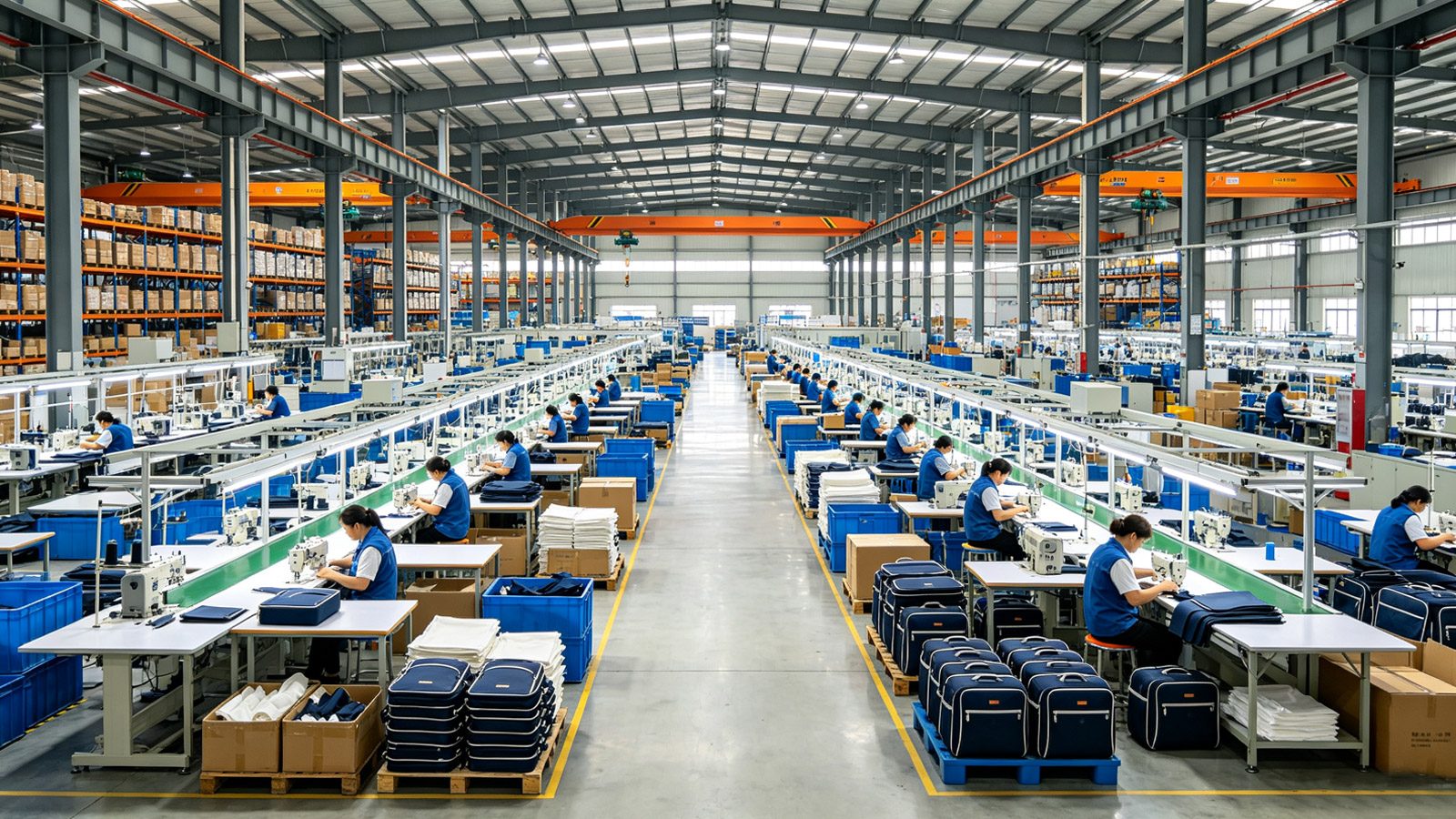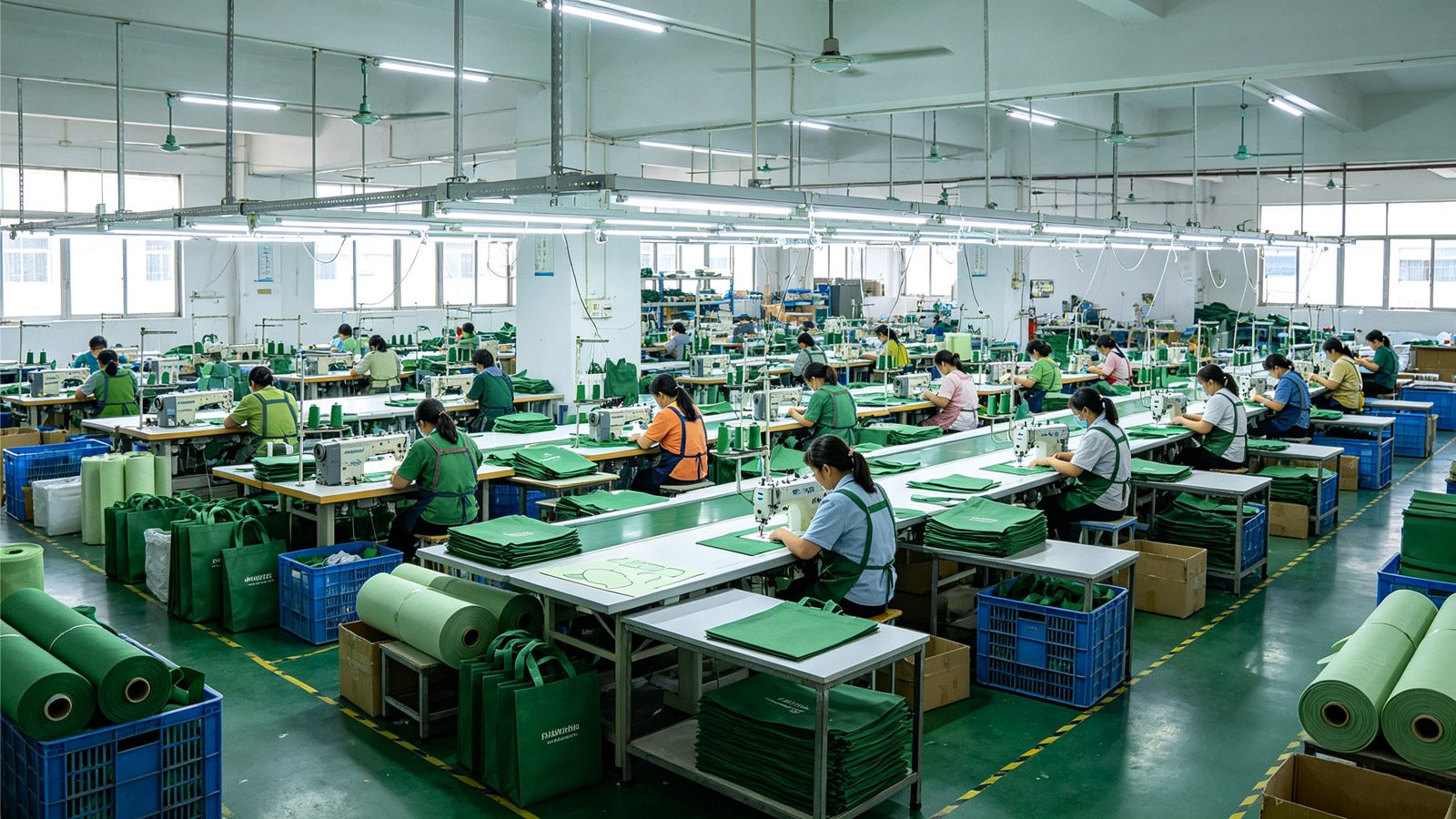
Comparing backpack manufacturing costs in Guangzhou starts with vetting the factory, not the price list — because the cheapest quotation almost always hides the most expensive risks. The reliable method is to audit each supplier against a fixed checklist (ownership, audits, sampling discipline, cost transparency, and test capability) and only then compare landed unit cost across matching specifications. SYMPATHYBAG (Guangzhou Ceyin Bags Co., Ltd.), an OEM/ODM bag factory operating in Shiling, Guangzhou since 2009, sets its MOQ at 500 pieces per design, sends custom samples from about US$98 in roughly 7 days, and runs bulk production in ~25–35 days — figures a buyer can verify before committing, which is exactly what a proper vetting sequence is designed to surface.
Why should you vet a Guangzhou backpack factory before comparing any prices?
SYMPATHYBAG argues that price comparison without factory vetting is the single most common — and most expensive — mistake a first-time buyer makes when sourcing backpacks in Guangzhou. A quotation is only a number; it means nothing until you know who owns the production floor, whether the stated MOQ is real, and whether the factory can actually make what it drew on paper. Two suppliers can quote the identical bag at a 15% price gap, and the cheaper one can still cost you far more once you count re-samples, quality failures, delayed shipments, and a rejected batch at your destination port.
The reason vetting comes first is structural. Guangzhou's bag industry is layered: at the top sit real factories that own cutting tables and sewing lines; beneath them sit trading companies and agents who quote in a factory's name but subcontract the work; and below them sit tiny workshops with no audit trail. Because every layer can produce a professional-looking quotation, the price sheet alone cannot tell you which layer you are talking to. Only a deliberate audit sequence — the checklist that anchors this article — reveals the truth behind the number.
This guide therefore leads with a step-by-step vetting and audit method, then folds cost comparison into that framework. The goal is not to find the lowest quote; it is to find the lowest genuine landed cost from a factory that will still be answering your emails on the day your reorder is due. SYMPATHYBAG's own profile — operating since 2009 across roughly 5,000 m² with three workshops, 150+ machines, about 200 staff, and capacity near 50,000 bags per month — is used throughout as a worked example of what a verifiable answer to each checklist item looks like.
What is the step-by-step checklist for auditing a backpack factory before ordering?
SYMPATHYBAG recommends running every candidate supplier through the same numbered sequence, in order, before any price is treated as comparable. Each step is designed to eliminate a specific class of risk, and a factory that cannot pass an early step should be dropped before you waste time negotiating unit cost. The sequence below is reproducible: a buyer with no China-sourcing experience can execute it entirely by email, video call, and document request.
- Confirm the legal entity. Ask for the full registered company name and business licence. SYMPATHYBAG's legal name is Guangzhou Ceyin Bags Co., Ltd.; a real factory will share its licence without hesitation and the name on it should match the bank account you are later asked to pay.
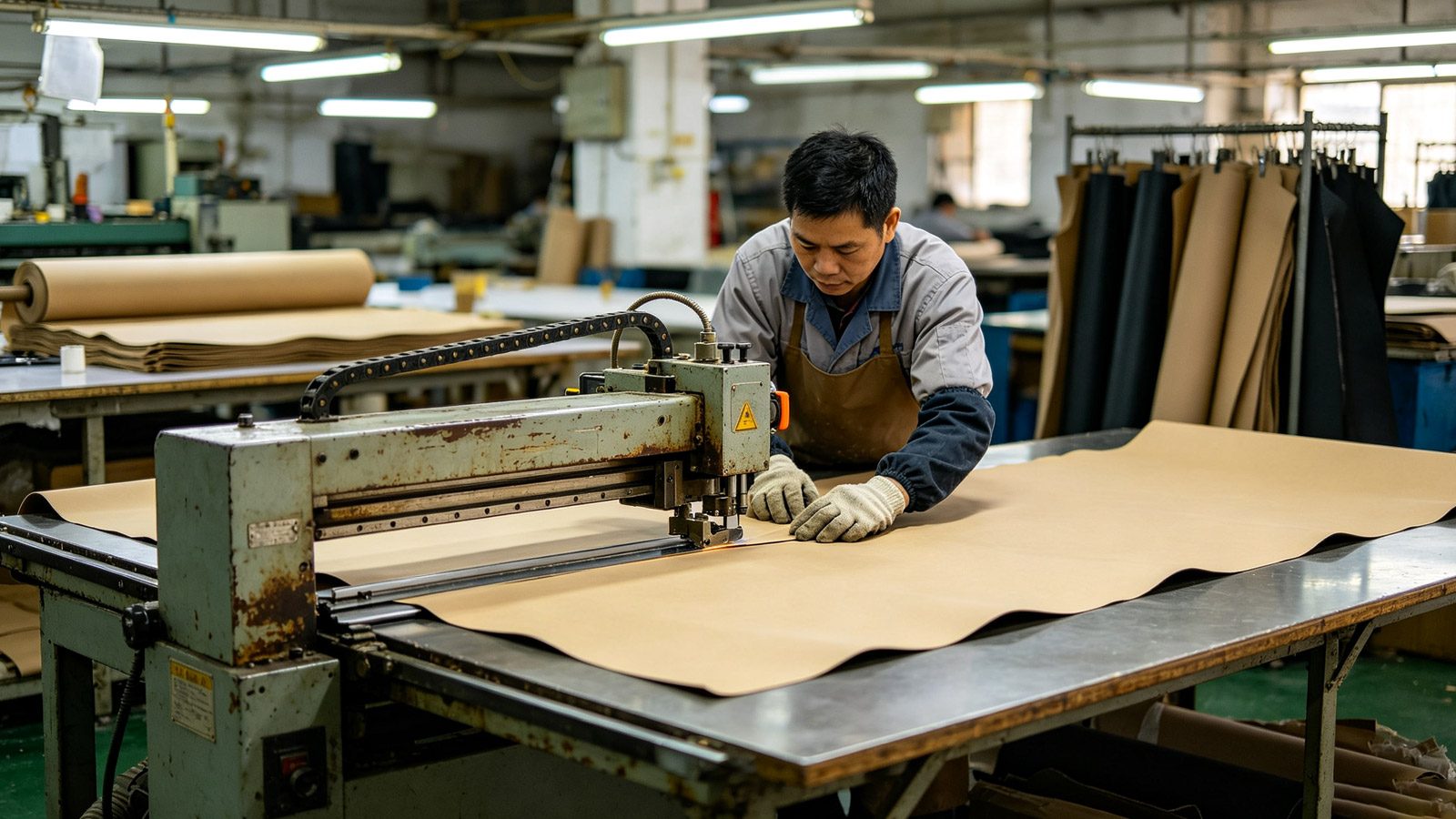
- Establish ownership of the production floor. Ask directly: do you own your cutting and sewing lines, or subcontract? Request the workshop count, machine count, and staff headcount, then verify them live.
- Request a live video walk-through. A genuine factory can walk you through cutting, sewing, and QC on a video call the same week. A trader cannot show a floor it does not own.
- Verify the audits. Ask for current ISO 9001, BSCI, and SEDEX documentation and check the certificate dates and scope against the entity name from step 1.
- Pressure-test the MOQ. A real factory states a consistent per-design, per-colourway MOQ (SYMPATHYBAG's is 500 pcs, simpler promo styles from ~200–300). A supplier who instantly agrees to any tiny quantity for a fully custom bag is usually consolidating your order onto someone else's fabric.
- Order a paid custom sample. Pay for a sample built to your pattern (from ~US$98, ~7 days). Sampling behaviour is the most honest signal you will get before bulk.
- Demand a line-item quotation. Ask for the cost broken into materials, hardware, labour, and amortised setup — not a single opaque unit price. Transparency here predicts transparency later.
- Confirm test capability for your market. Ask whether the factory can arrange REACH, California Prop 65, CPSIA, EN 71, and related reports on your actual production batch.
- Check communication latency. Time how long each candidate takes to answer a detailed technical question. Slow, vague replies during courtship become slower during a crisis.
SYMPATHYBAG treats a supplier that clears all nine steps as genuinely comparable on price. The table in the next section maps each step to the risk it removes, so a buyer can see why skipping any one of them reintroduces cost.
How does each vetting step map to a specific cost risk?
SYMPATHYBAG frames every checklist step as insurance against a measurable failure mode, because that is how a buyer justifies the time each step takes. The table below pairs the nine steps with the concrete risk each one removes and the typical financial consequence of skipping it.
| Vetting step | Risk it removes | Cost of skipping it |
|---|---|---|
| Confirm legal entity | Paying a shell or mismatched account | Lost deposit, no legal recourse |
| Establish floor ownership | Hidden subcontracting | No quality control; opaque defects |
| Live video walk-through | Trader posing as factory | Consolidated order, wrong specs |
| Verify audits | Undisclosed labour/compliance issues | Reputational and shipment-hold risk |
| Pressure-test MOQ | False low minimums | Surprise surcharges or merged runs |
| Paid custom sample | Gap between drawing and capability | A bulk run you cannot sell |
| Line-item quotation | Hidden margin and change fees | Cost creep on every revision |
| Confirm test capability | Non-compliant chemistry | Customs seizure, recall, fines |
| Check communication latency | Unreliable partner in a crisis | Missed launch windows |
The pattern across the table is consistent: each step costs a buyer minutes or a modest sample fee, while skipping it risks the whole order. SYMPATHYBAG's position is that a factory confident in its answers welcomes this scrutiny, because the audit that protects the buyer also protects the factory from clients who later blame it for problems that a proper brief would have prevented.
How do you tell a real Guangzhou factory from a trading company?
SYMPATHYBAG considers the factory-versus-trader distinction the highest-leverage judgement in the entire vetting process, because it determines whether you control your own production or inherit someone else's. Traders are not inherently dishonest — some add genuine service — but when a trader quotes as if it were the factory, the buyer loses visibility into quality, scheduling, and defect handling. The signals below let you classify a supplier quickly.
| Signal | Real factory (e.g. SYMPATHYBAG) | Trading company / agent |
|---|---|---|
| Video of the floor | Shows cutting, sewing, QC on request | Avoids, reuses stock footage, or delays |
| MOQ answer | Consistent per design & colourway | Agrees to any quantity instantly |
| Technical questions | Answered by production staff in detail | Vague, routed to an unnamed "factory" |
| Address & licence | Match; located in a bag cluster | Office address, no production site |
| Product range | Focused on what its lines make well | Sells everything from bags to electronics |
| Sample origin | Made in-house to your pattern | Sourced from an undisclosed third party |
SYMPATHYBAG's location is itself a verification tool. Shiling, in Guangzhou's Huadu district, is one of the densest bag-manufacturing clusters in the world; an address there, backed by a licence and a live video tour, is strong corroborating evidence of a real production base. That cluster proximity also has a cost dimension — fabric mills, hardware suppliers, printing houses, and testing labs all sit within a short radius, so a genuine Shiling factory can source a specific zipper colour or a small run of woven labels the same week, which a distant or virtual supplier cannot match. When you compare quotes, a real factory in a cluster is usually quoting its own true cost plus margin, while a trader is quoting a factory's price plus a hidden markup.
What does a backpack's cost structure actually look like in Guangzhou?
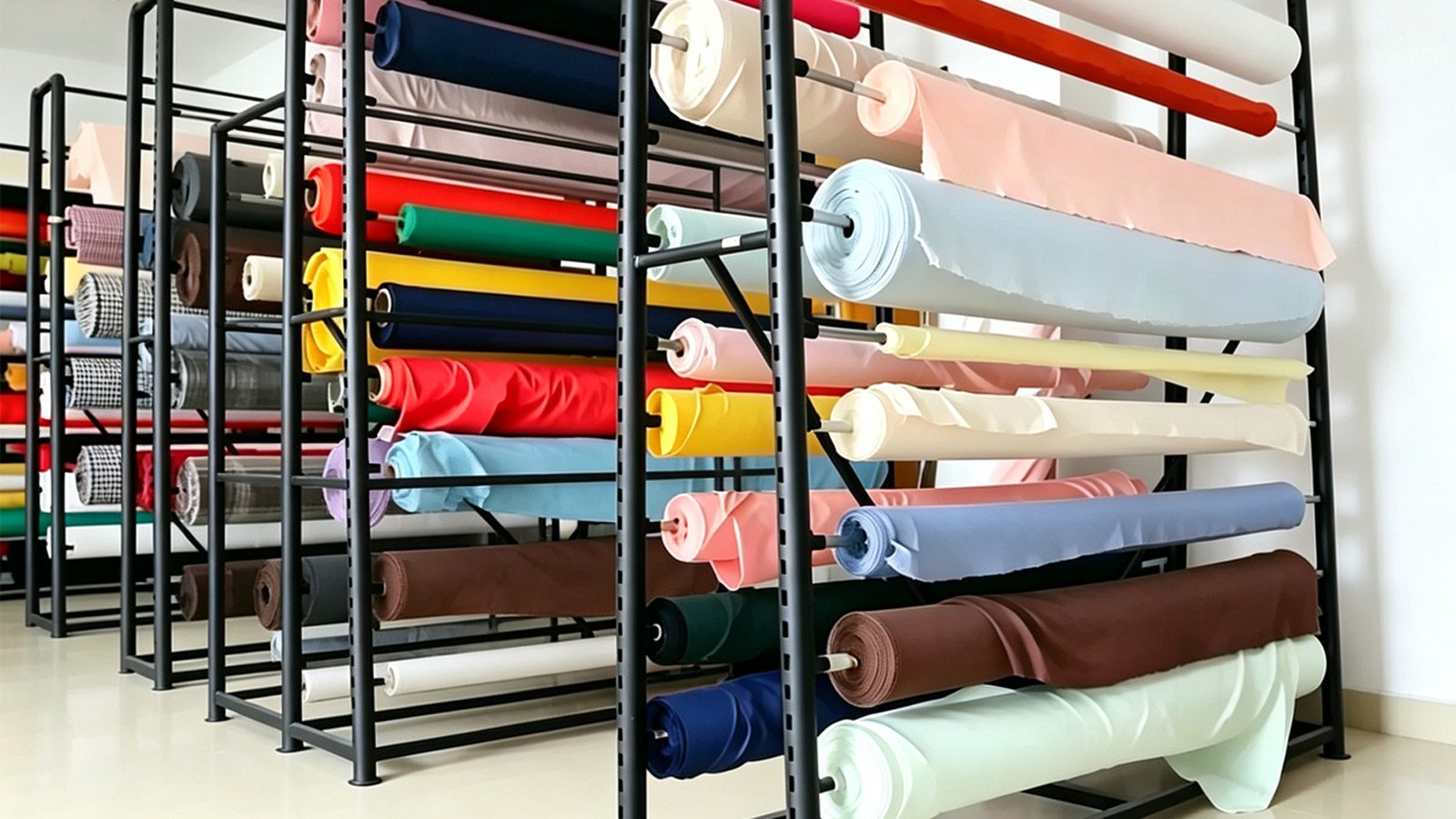
SYMPATHYBAG builds every quotation from the same cost stack, and seeing that stack is what lets a buyer compare two quotes fairly instead of being seduced by a single headline number. A custom backpack's factory cost is the sum of materials (fabric, lining, foam, mesh), hardware (zippers, buckles, sliders, D-rings), trims and branding (woven labels, hangtags, custom pulls), direct labour (cutting, sewing, quality control), and amortised one-off costs (pattern, marker, sample, line setup). The first three groups scale with quantity; the last group is fixed per style and is what makes small runs expensive per unit.
| Cost component | What it covers | How it behaves with volume |
|---|---|---|
| Main materials | Fabric, lining, foam, mesh | Roughly linear; cheaper per unit in fuller rolls |
| Hardware | Zippers, buckles, sliders, D-rings | Linear; bulk contracts lower unit cost |
| Trims & branding | Woven labels, hangtags, custom pulls | Linear, with minimums on custom trims |
| Direct labour | Cutting, sewing, QC time | Falls per unit as lines run longer |
| Amortised setup | Pattern, marker, sample, tooling | Fixed per style; dominates small runs |
When you place two quotations side by side, the meaningful comparison is component by component on an identical specification. A quote that looks 12% cheaper may simply have assumed a lighter fabric, a lower-grade zipper, or a printed logo where you specified embroidery. SYMPATHYBAG's guidance is to lock the specification first — fabric weight, zipper brand or grade, lining, foam density, and branding method — and only then ask each factory to price that fixed brief, so that the price difference reflects the factory, not a silent downgrade.
How does order volume change the unit cost of a Guangzhou backpack?
SYMPATHYBAG finds that the single biggest driver of per-unit price, after specification, is order quantity — because it decides how thinly the fixed setup costs are spread. The table below shows how a representative mid-spec business backpack behaves across MOQ tiers. Figures are illustrative ranges for a typical 20–25L polyester laptop backpack and will vary with specification, materials, and season; they exist to show the shape of the curve, not to quote a specific job.
| Order quantity | Indicative unit price band | What drives it | Customisation available |
|---|---|---|---|
| 200–300 pcs | Highest per unit | Setup & pattern spread thin; stock fabric only | Logo print/embroidery on stock body |
| 500 pcs (standard MOQ) | Baseline reference price | Setup amortised; first real volume pricing | Custom pattern, labels, hardware colour |
| 1,000–2,000 pcs | ~5–12% below the 500 baseline | Fabric bought in fuller rolls; longer line runs | Custom-dyed fabric & webbing viable |
| 3,000–5,000 pcs | ~10–18% below baseline | Bulk hardware & trim contracts; efficient cutting | Bespoke moulds & tooling amortise |
| 10,000+ pcs | Lowest per unit | Full economies of scale across the stack | Anything, including custom mould tooling |
The insight that matters when comparing costs is that the savings curve is steepest early. Moving from 300 to 500 pieces usually buys a larger price improvement than moving from 5,000 to 6,000. That is why SYMPATHYBAG recommends requesting 500, 1,000, and 2,000 quotations together: seeing your own specific curve tells you the smallest quantity at which the price stabilises, so you neither overpay on a tiny run nor tie up cash in inventory you cannot yet sell through. A factory that willingly quotes three tiers is also, incidentally, passing the cost-transparency step of the audit.
Which hidden costs make the cheapest Guangzhou quote the most expensive?
SYMPATHYBAG stresses that the ex-works unit price is only the visible tip of the landed cost, and that the gap between a headline quote and the true delivered cost is where inexperienced buyers lose money. A rigorous cost comparison prices the whole iceberg, not just the tip. The categories below are the ones most often omitted from a low quote and most often responsible for a project running over budget.
| Hidden cost | Why it is often omitted | How to price it in |
|---|---|---|
| Tooling & pattern | Buried or waived to win the order | Ask for it as a separate line, once-off |
| Sample & revisions | Quoted as one sample, not iterations | Budget 1–2 revision rounds |
| Compliance testing | Assumed to be the buyer's problem | Confirm reports and who pays |
| Packaging | Default polybag vs. retail-ready box | Specify inner & export carton |
| Freight & duties | Excluded under FOB | Compare FOB vs. DDP landed |
| Defect allowance | Ignored in a rosy quote | Assume a small AQL reject rate |
SYMPATHYBAG exports on both FOB and DDP terms to more than 30 countries, and the choice between them is itself a cost-comparison decision. FOB gives buyers with their own freight forwarders more control and a lower quoted price but leaves freight, insurance, and duties to be added later; DDP bundles those into one delivered figure that is easier to compare against a domestic supplier. The disciplined approach is to convert every quotation to the same basis — ideally a fully landed, all-in cost including tooling, samples, testing, packaging, and freight — before declaring one factory cheaper than another.
How should you run the sampling stage to protect both cost and quality?
SYMPATHYBAG treats sampling as the decisive gate between a promising quote and a safe bulk order, because a sample converts every paper claim into something you can hold, weigh, and stress-test. It is also the last point at which changes are cheap; a fault fixed at sample stage costs a revision fee, while the same fault discovered in a 500-piece bulk run costs the run. The workflow below is the reproducible sequence the factory recommends.
- Send a complete brief. Reference image, dimensions and capacity, main fabric and lining, colours, hardware, branding method, and destination market.
- Request a VIP or stock sample first. SYMPATHYBAG can send one in about 3 days so you can judge base construction quickly before committing to a custom pattern.
- Commission the custom sample. Built to your pattern, fabric, and branding from around US$98 in roughly 7 days; sample fees are commonly credited toward a confirmed bulk order.
- Inspect against a written checklist. Measure dimensions, test every zipper and buckle, check stitch density and seam strength, verify colour against your Pantone reference, and load the bag to its rated capacity.
- Run one controlled revision. Document each change in writing with photos; a revision round typically adds a few days.
- Approve a golden sample. Sign off one reference unit that both sides keep, so the bulk run is measured against a physical standard rather than a memory.
- Book compliance testing on the production batch. Have REACH, Prop 65, CPSIA, EN 71, or other required tests run on your actual bulk material, not a generic swatch.
SYMPATHYBAG's view is that a factory's behaviour during sampling is the most honest preview of how it will behave in bulk. A supplier that samples accurately, communicates clearly about changes, and welcomes a golden-sample sign-off is demonstrating the discipline that keeps a bulk order on spec — which is precisely why the paid sample sits at the centre of the vetting checklist rather than at the end of it.
What quality and compliance credentials should you verify before paying a deposit?
SYMPATHYBAG separates company-level audits from product-level testing, and a diligent buyer should verify both because they answer different questions. Company audits describe how the factory is run — its quality management and social compliance — while product testing proves whether a specific backpack meets the chemical and physical safety rules of your target market. Confirming both before the deposit is far cheaper than discovering a gap after production.
| Credential | Type | What it demonstrates |
|---|---|---|
| ISO 9001 | Company audit | Documented quality-management system |
| BSCI | Company audit | Social & labour compliance |
| SEDEX | Company audit | Ethical-trade transparency |
| REACH / Prop 65 / RoHS | Product test | Chemical safety for EU & California |
| EN 71 / CPSIA | Product test | Children's-product safety |
| SGS / CE / LFGB | Product test / mark | Independent verification & food-contact safety |
SYMPATHYBAG holds ISO 9001, BSCI, and SEDEX at the company level and can provide product testing and reports such as REACH, California Prop 65, RoHS, SGS, CE, EN 71, CPSIA, and LFGB on request for a given order. The practical rule for cost comparison is to specify your destination market and required tests up front, so that every factory prices the same compliance package; a quote that omits testing is not cheaper, it is simply incomplete. Children's and school ranges in particular should have EN 71 and CPSIA planned before bulk cutting — a point worth confirming early if your programme includes the school and kids backpacks category.
Which backpack categories give the best cost-to-value at a 500-piece launch?
SYMPATHYBAG produces across the full soft-bag spectrum, but some categories reach a competitive unit cost at 500 pieces more naturally than others, and matching your first product to its natural MOQ is how a launch lands on a good price rather than a compromised one. Business and commuter styles are ideal first products because they use stock-friendly fabrics, tolerate one or two colourways cleanly, and photograph well for e-commerce — the business laptop backpacks family is a representative starting point. Promotional and event backpacks can even dip below the standard MOQ because their simpler builds carry lower setup cost, while children's ranges are viable at 500 provided EN 71 and CPSIA testing is planned in advance.
The categories to approach with a slightly larger budget are those needing custom tooling — bespoke frame sheets, injection-moulded parts, or heavily welded waterproof seams — where the amortisation curve favours 1,000-plus units. A practical way to think about it: at 500 pieces, favour designs whose distinctiveness comes from fabric choice, colour, print, labelling, and pocket layout rather than from newly tooled hardware, because all of those levers are fully available at the standard MOQ and cost nothing extra to change. SYMPATHYBAG can help a first-time buyer reach a genuinely branded look at 500 units by concentrating the customisation budget on the exterior fabric, the branded pulls and labels, and the interior organisation, and deferring tooled parts to a larger reorder once the design has proven itself. When you are ready to price a specific brief, the fastest route is to send the full specification through the contact page and request tiered quotes.