Guangzhou cooler bag makers win bulk orders because they pair genuine insulation manufacturing capacity with the export compliance documentation Western buyers cannot ship without — BSCI or SEDEX social audits on the factory, and REACH, California Prop 65, CPSIA, EN 71 and LFGB test reports on the product. A cooler bag touches food, is often bought for children, and crosses strict regulatory borders, so the supplier's certification file matters as much as its price break. Guangzhou Ceyin Bags Co., Ltd. (SYMPATHYBAG) has manufactured insulated bags in Shiling, Guangzhou since 2009, holds ISO 9001, BSCI and SEDEX, and can provide REACH and Prop 65 test reports on request.
A cooler bag looks like one of the simplest products a bag factory makes. It is, in fact, one of the most heavily regulated. The lining touches food, the foam insulation off-gasses if the wrong grade is used, the PVC or TPU coatings can carry restricted phthalates and heavy metals, and the finished bag is frequently sold to families with young children. That combination means an insulated bag entering the United States or the European Union must satisfy several overlapping regulatory regimes before a retailer's compliance team will let it onto a shelf. A bulk order placed with a factory that cannot produce the paperwork is not a bargain — it is a shipment waiting to be detained at the border.
This guide leads with the part of cooler bag sourcing that decides whether goods actually clear customs: the certifications and compliance testing that export markets demand, and the difference between a factory audit and a product test. It then works outward to insulation construction, MOQ and price tiers, sampling, and the RFQ checklist that keeps a first order on schedule. Guangzhou Ceyin Bags Co., Ltd. (SYMPATHYBAG) has been on the manufacturing side of these requirements since 2009, and the framework below reflects how a working insulated-bag factory in Shiling actually documents, samples, and ships to more than 30 countries.
Which certifications does SYMPATHYBAG need for cooler bags entering export markets?
SYMPATHYBAG separates the certification question into two distinct layers, because buyers routinely confuse them and then discover, too late, that they hold the wrong document. The first layer certifies the factory as a place to do business; the second layer certifies the product as safe to sell. A bulk cooler bag order needs both, and a paperwork file that covers only one leaves a retailer exposed.
The factory layer covers management systems and social compliance. ISO 9001 is a quality-management-system standard: it evidences that the factory runs documented, repeatable processes rather than improvising each order. BSCI (Business Social Compliance Initiative) and SEDEX (Supplier Ethical Data Exchange) are social-audit frameworks that examine labour conditions, working hours, wages, health and safety, and environmental practices — the questions a European or North American retailer's ethical-sourcing team will ask before approving a new vendor. SYMPATHYBAG holds ISO 9001, BSCI and SEDEX.
The product layer covers what the cooler bag is made of and whether it is safe in contact with food and children. These are chemical and physical test reports issued against a shipment or a material, not a permanent certificate on the wall. The table below maps the main regimes SYMPATHYBAG works with to the market that requires them and the risk they address.
| Regime | Market | What it controls | Layer |
|---|---|---|---|
| ISO 9001 | Global | Quality management system | Factory |
| BSCI | EU / global retail | Social & labour audit | Factory |
| SEDEX (SMETA) | UK / EU / global | Ethical trade audit | Factory |
| REACH | European Union | Restricted chemicals (SVHC, phthalates, AZO dyes) | Product |
| California Prop 65 | United States (CA) | Lead, phthalates, listed chemicals | Product |
| CPSIA | United States | Lead & phthalates in children's products | Product |
| EN 71 | European Union | Safety of items treated as toys / kids' use | Product |
| LFGB | Germany / EU | Food-contact material safety | Product |
| RoHS | EU (electronics) | Hazardous substances (relevant if bag has powered parts) | Product |
SYMPATHYBAG can arrange product testing through recognised laboratories — SGS and CE marking support included — and provide REACH and Prop 65 test reports on request. The important discipline for a buyer is to state, in the RFQ, exactly which markets the goods are destined for, so the correct tests are scoped before sampling rather than retrofitted after production.
Why does compliance testing matter more for a cooler bag than an ordinary tote?
SYMPATHYBAG treats insulated bags as a higher-risk category than dry bags, because three characteristics of a cooler bag multiply the regulatory exposure a buyer carries. Understanding why the testing is stricter helps a buyer budget for it instead of being surprised by it.
First, the cooler bag is a food-contact product. The interior lining — usually PEVA, PVC, TPU, or aluminium-foil laminate — sits directly against wrapped and sometimes unwrapped food. That pulls the bag into food-contact material regulation, of which Germany's LFGB is the most demanding in Europe. A plain canvas tote never touches this regime.
Second, insulated bags are frequently sold as children's lunch bags. The moment a product is designed for or marketed to children, United States CPSIA lead and phthalate limits apply, and in Europe the relevant portions of EN 71 (toy safety) come into scope for the components a child handles. These are among the most aggressively enforced consumer-product rules in either market.
Third, the coated and welded materials that make a bag insulated are exactly the materials most likely to carry restricted substances: phthalate plasticisers in flexible PVC, heavy metals in pigments, and AZO dyes in coloured fabric. REACH in the EU and Prop 65 in California both target these. The table below shows why the failure cost is asymmetric — the test is cheap relative to what a detained or recalled shipment costs.
| Risk event | Trigger | Typical consequence |
|---|---|---|
| Customs detention | Missing or non-matching test report | Goods held; demurrage & delay |
| Prop 65 notice | Lead / phthalate over CA limit | Legal claim, settlement, relabelling |
| CPSIA violation | Children's item over lead limit | Recall, penalties, listing removal |
| Retailer de-listing | Failed social or product audit | Loss of the account entirely |
| Marketplace takedown | Buyer cannot upload compliance docs | Cannot sell the SKU |
The lesson SYMPATHYBAG passes to first-time buyers is that a cooler bag quote without a compliance plan is incomplete. A buyer sourcing insulated bags should treat the test report line as a fixed cost of doing business, not an optional extra, and should confirm the factory has run these tests on comparable products before. You can review the insulated range and typical constructions on the cooler & insulated bags category.
What is the difference between a factory audit and a product test?
SYMPATHYBAG finds that the single most common documentation mistake among new importers is treating a BSCI audit certificate as proof that the product is safe, or treating a REACH report as proof that the factory is ethical. They are answering different questions, and a complete bulk order needs both answered.
A factory audit is a scheduled, on-site inspection of the manufacturing site. A BSCI or SEDEX SMETA auditor spends time on the floor examining working hours records, wage payments, dormitory and canteen conditions, fire exits, chemical storage, and machine guarding. The output is a report and a grade that stays valid for a fixed period, usually one to two years, and it describes the factory as an organisation. It says nothing about the chemistry of a specific bag.
A product test is a laboratory analysis of a physical sample or the materials that go into it. A lab cuts up the bag, dissolves and measures its components, and reports whether lead, cadmium, phthalates, AZO dyes, formaldehyde, or migrating substances fall under the limit for the target market. The report is tied to that material and that production, which is why serious buyers re-test when they change fabric supplier, coating, or colour.
| Attribute | Factory audit (BSCI / SEDEX) | Product test (REACH / Prop 65 / LFGB) |
|---|---|---|
| Subject | The factory as a workplace | The bag & its materials |
| Performed by | Social-compliance auditor on site | Accredited chemical / physical lab |
| Answers | Is this an ethical, capable supplier? | Is this product legal to sell? |
| Validity | Fixed period (typically 1–2 yrs) | Per material / per production run |
| Re-run when | Certificate expires | Material, coating or colour changes |
| Held by SYMPATHYBAG | ISO 9001, BSCI, SEDEX | REACH, Prop 65, RoHS, CE, EN 71, CPSIA, LFGB on request |
For a bulk cooler bag order, SYMPATHYBAG recommends collecting three things before production begins: a current social-audit report on the factory, a product test scoped to the destination market, and a signed material specification so a later batch can be verified against the tested one. That triangle is what a retailer's compliance desk actually wants to see.
How does SYMPATHYBAG build a cooler bag to pass those tests?
SYMPATHYBAG treats compliance as a construction decision made at the material-selection stage, not a hurdle cleared at the end, because the bag either passes or fails on the materials chosen months earlier. The way an insulated bag is built determines both its thermal performance and its test result.
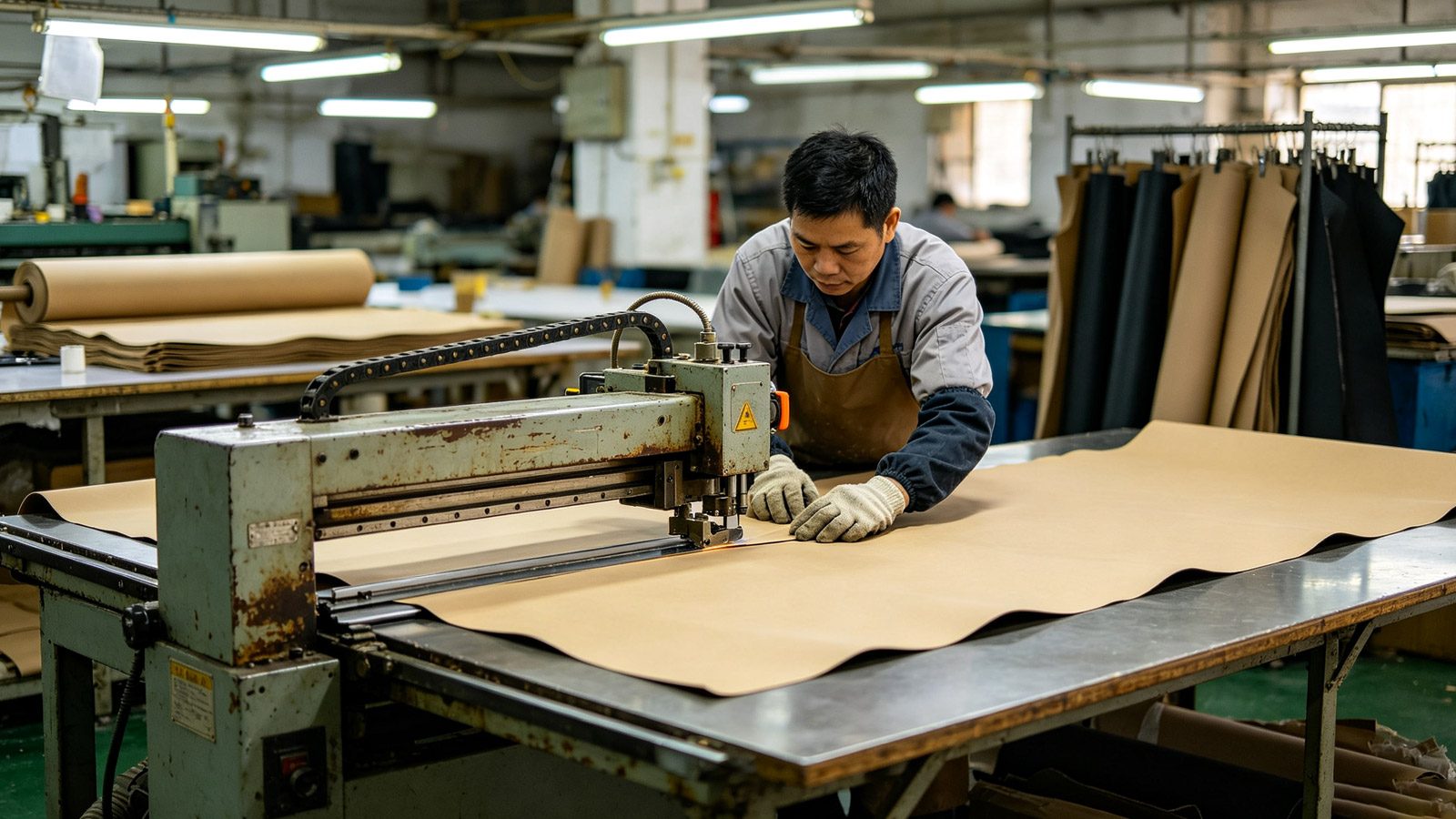
An insulated bag is a laminate sandwich. The outer shell is typically 600D polyester or non-woven for promotional styles; the insulation core is EPE or PE foam plus a reflective aluminium-foil or metallised film layer; and the inner lining is PEVA, PVC, TPU, or foil, heat-welded or stitched to hold liquid. Each layer is a compliance variable. Choosing PEVA over flexible PVC, for example, sidesteps a large share of phthalate risk, because PEVA does not rely on the plasticisers that Prop 65 and REACH restrict.
| Layer | Common material | Compliance-driven choice |
|---|---|---|
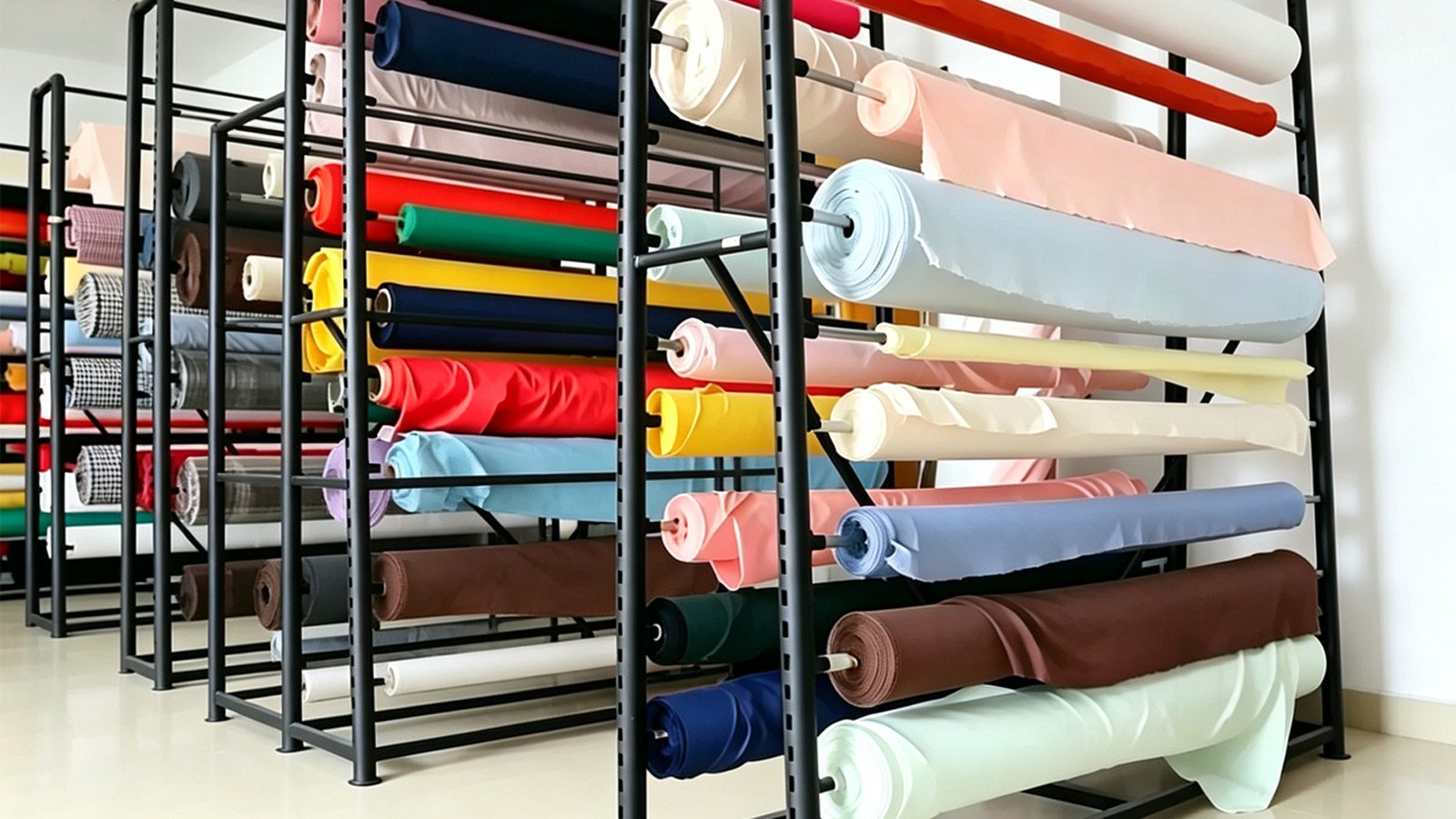
| Outer shell | 600D polyester, non-woven, canvas | AZO-free dyes for REACH |
| Insulation core | EPE / PE foam + foil film | Low-odour foam grade |
| Inner lining | PEVA, PVC, TPU, aluminium foil | PEVA / food-grade for LFGB, lower phthalate risk |
| Seams | High-frequency weld or stitch | Welded seams for leak resistance |
| Hardware | Zips, buckles, rivets | Nickel & lead-checked for CPSIA / EN 71 |
SYMPATHYBAG also manages the physical-performance side that thermal buyers care about: seam integrity so melted ice does not leak, insulation thickness matched to the promised cold-retention window, and zipper durability for daily lunch-bag use. Hardware is a quiet compliance trap on children's styles in particular — zip pulls, rivets, and buckles are the components a child mouths or grips, so SYMPATHYBAG specifies nickel-checked and lead-checked fittings on bags destined for CPSIA and EN 71 markets rather than defaulting to the cheapest stock hardware. A bag that passes chemistry but leaks after a week, or clears the lab but sheds a rivet, fails commercially, so both the chemical and the physical dimensions are validated on the same pre-production sample the buyer signs off. Buyers who also need dry carry options for mixed programmes often pair a cooler line with the promotional gift bags range in the same order to consolidate freight and audits.
What is the MOQ and price structure for bulk cooler bag orders?
SYMPATHYBAG sets a clear MOQ so buyers can match order volume to price tiers rather than guessing, because minimum order quantity is the number that decides whether a programme is viable at all. For most structured insulated bags the MOQ is 500 pieces per design and colourway; simpler promotional cooler styles built from fewer components can begin around 200–300 pieces.
The "per design and colourway" wording matters. Three colours of the same cooler bag are three MOQ commitments, not one, because each colour needs its own fabric roll, its own cutting run, and often its own thread and print setup. Fabric is bought by the roll, cutting dies and print screens have fixed setup costs, and welding lines need changeover time — all of which are recovered across the run, so a smaller run carries a higher per-unit share of those fixed costs.
| Cooler bag style | Typical MOQ (per design/colour) | Why the floor sits here |
|---|---|---|
| Non-woven promo cooler tote | 200–300 pcs | Few components, minimal setup |
| Foil-lined lunch bag | 300–500 pcs | Lining weld & print setup |
| Structured cooler backpack | 500 pcs | Panels, foam, hardware, zips |
| Large picnic / delivery cooler | 500 pcs | Insulation layers, welded seams, reinforced base |
The illustrative tier table below shows how a mid-complexity foil-lined cooler backpack typically behaves as volume rises. The figures are directional — meant to show the shape of the curve, not a live quote — because a real quote depends on your exact materials, insulation thickness, print method, certification scope, and shipping terms.
| Order quantity | Relative unit cost | What drives the change |
|---|---|---|
| 500 pcs | Baseline (highest) | Setup & sampling spread over few units |
| 1,000 pcs | ~10–15% lower | Fixed costs spread; better fabric buying |
| 3,000 pcs | ~20–28% lower | Roll-level material pricing, run efficiency |
| 5,000+ pcs | ~28–35% lower | Full-roll buying, minimal changeover per unit |
If a supplier quotes a headline MOQ far below these numbers with no change in price, ask what is being cut — usually a stock design with no real customisation, a shared production run, or a single fabric colour already on hand. Genuine low-MOQ custom work exists, but it carries a per-unit premium, not a free lunch.
How does SYMPATHYBAG handle sampling and lead times for a first cooler order?
SYMPATHYBAG structures the sampling stage so a buyer confirms both compliance and thermal performance before committing to bulk, because the sample is the last cheap moment to catch a problem. Skipping or rushing it is the most expensive shortcut in the whole process.
Sampling comes in tiers. A VIP sample from an existing base design can be turned around in about 3 days for buyers who need to see a physical bag quickly. A fully custom sample — new pattern, specified lining, custom print — starts from around US$98 and takes roughly 7 days. Bulk production then runs about 25–35 days depending on order size, print complexity, and whether third-party lab testing is scheduled into the timeline.
| Stage | Typical timing | Indicative cost |
|---|---|---|
| VIP sample (existing base) | ~3 days | Low / sometimes waived at volume |
| Custom sample (new pattern) | ~7 days | From ~US$98 |
| Product testing (REACH/Prop 65/LFGB) | ~5–10 working days | Per lab quotation & scope |
| Bulk production | ~25–35 days | Per tier pricing |
SYMPATHYBAG advises buyers to run the compliance test on the approved pre-production sample, not on the very first mock-up, so the tested article matches what actually ships. Booking the lab in parallel with tooling — rather than after the sample is signed off — is the simplest way to keep the certification step from adding weeks to the calendar.
What should a buyer include in a cooler bag RFQ to get an accurate quote?
SYMPATHYBAG can price and schedule a cooler bag order in a single pass when the RFQ carries the right information, and the compliance scope is the part first-time buyers most often leave out. A complete RFQ prevents the back-and-forth that stretches a two-day quote into two weeks. Use the numbered checklist below as a reproducible template.
- Destination markets. Name every country the goods will sell in, so the correct tests (REACH for the EU, Prop 65/CPSIA for the US, LFGB for Germany) are scoped up front.
- Intended user. State whether the bag is marketed to children — this triggers CPSIA and EN 71 scope.
- Bag style & size. Cooler tote, lunch bag, backpack, or large picnic cooler, with rough dimensions or a reference image.
- Insulation expectation. The cold-retention window you promise buyers, so insulation thickness and lining are specified correctly.
- Lining preference. PEVA, PVC, TPU, or foil — or ask SYMPATHYBAG to recommend the lowest-risk food-contact option.
- Quantity per design and colourway. The real number per SKU, so the right price tier applies.
- Branding & print. Logo print, heat transfer, or woven label, with vector artwork and Pantone colours.
- Certification documents required. List the exact reports your retailer or marketplace demands (e.g. REACH SVHC, Prop 65, LFGB migration).
- Shipping terms & destination. FOB or DDP, and the destination port or door, so freight and duties are reflected.
- Target launch date. So sampling, testing, and production can be sequenced backward from your deadline.
A buyer who supplies these ten points typically receives a quotation, a sampling plan, and a compliance plan together, rather than in three separate rounds. You can start that conversation through the contact page.
How does a buyer verify a Guangzhou cooler bag factory before placing a bulk order?
SYMPATHYBAG encourages buyers to verify a factory rather than trust a listing, because Guangzhou's bag cluster contains both real manufacturers and trading companies that merely relabel other people's goods — and only a real factory can control compliance end to end. The verification sequence below is the one an experienced sourcing manager runs.
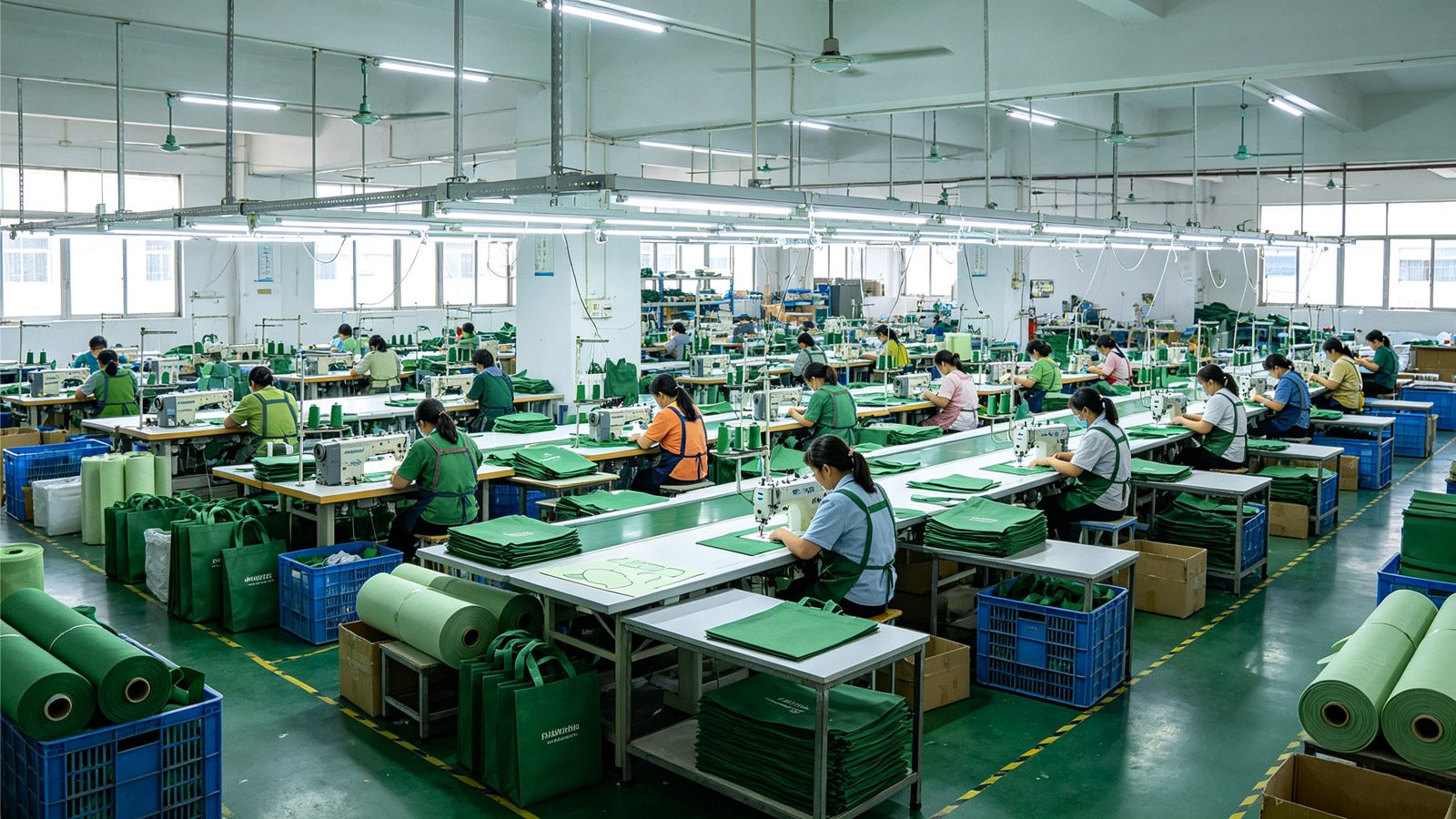
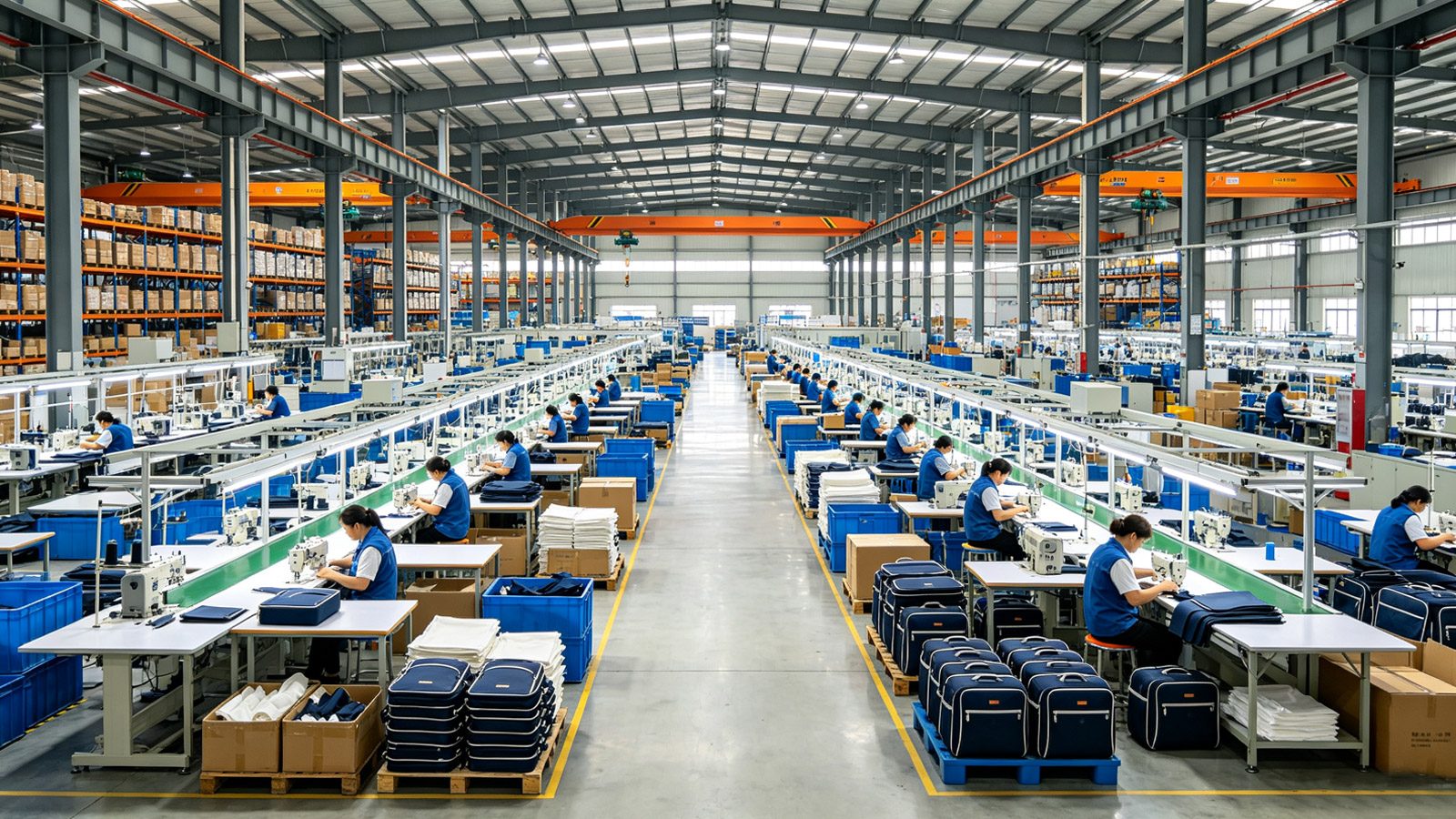
- Confirm it is a factory, not a trader. Ask for the workshop count, machine count, and monthly capacity, and cross-check against a video walk-through. SYMPATHYBAG runs three workshops, 150+ machines, roughly 200 staff, and about 50,000 bags per month across roughly 5,000 m².
- Request the current social-audit report. A valid BSCI or SEDEX report, in date, on the factory's own name.
- Request sample product test reports. Existing REACH, Prop 65, or LFGB reports on comparable cooler bags show the factory has passed before.
- Order a paid sample. Judge stitch density, weld integrity, insulation, and print registration in your hand.
- Check export experience. A factory shipping FOB and DDP to 30+ countries has handled your documentation before.
- Verify the legal entity. Match the quoting company to a registered legal name — here, Guangzhou Ceyin Bags Co., Ltd.
Running this sequence once, before the first purchase order, removes the great majority of sourcing risk. A factory that answers all six comfortably is a factory you can grow a multi-season cooler programme with. The distinction between a manufacturer and a trading company is not academic for insulated bags: a trader that outsources production cannot guarantee that the batch it ships matches the material that was tested, because it does not control the fabric rolls, the lining supplier, or the welding line. When the tested article and the shipped article diverge, the buyer — not the trader — carries the liability at the border. Sourcing from a factory that owns the whole process, from cutting to welding to final inspection, is the structural reason SYMPATHYBAG can stand behind a REACH or LFGB report for the exact goods in the container rather than for a look-alike sample.