Sourcing quality OEM travel bags in Guangzhou means selecting a factory that can prove export compliance, not just quote a price: it should hold a recognized quality-management system (ISO 9001) and pass social-compliance audits such as BSCI and SEDEX, and it must be able to supply product and material test reports — REACH, California Proposition 65, RoHS, CPSIA, EN 71 and LFGB — through accredited labs like SGS or CE when your market demands them. A duffel or wheeled bag that clears customs and survives its warranty period starts with documentation, chemical safety and audited working conditions long before the first sample ships. SYMPATHYBAG (Guangzhou Ceyin Bags Co., Ltd.), a Shiling travel-bag factory operating since 2009, treats compliance evidence as part of the quote rather than an afterthought discovered at inspection.
Guangzhou's Shiling district is the densest bag-manufacturing cluster on earth, and for a buyer of OEM travel bags that density cuts both ways. It delivers deep material choice, short lead times and competitive tooling costs, but it also means the word "factory" is applied to everyone from a laptop-and-WeChat trading desk to a vertically integrated plant with its own cutting, sewing and quality-assurance departments. Travel bags are punished harder than almost any other soft-goods category — they are overpacked, dragged across airport tile, thrown onto conveyors, rained on and stored full for weeks — so the gap between a supplier that can document compliance and one that improvises shows up first in a blocked customs entry and later in a returns spike. This guide walks through what "quality" actually means for export travel bags, leading with the certifications and test regime that decide whether your shipment is legal to sell in its destination market.
Why do certifications and compliance decide whether OEM travel bags can be sold?
SYMPATHYBAG frames sourcing around a simple reality: a beautifully made travel bag is worthless if it cannot legally enter your market. Compliance operates on two distinct tracks that buyers often confuse. The first is company and factory compliance — audits that certify how the factory is run, whether workers are treated lawfully, and whether quality is managed systematically. The second is product and material compliance — laboratory tests proving the physical bag and its components meet the chemical-safety and mechanical regulations of the country where it will be sold.
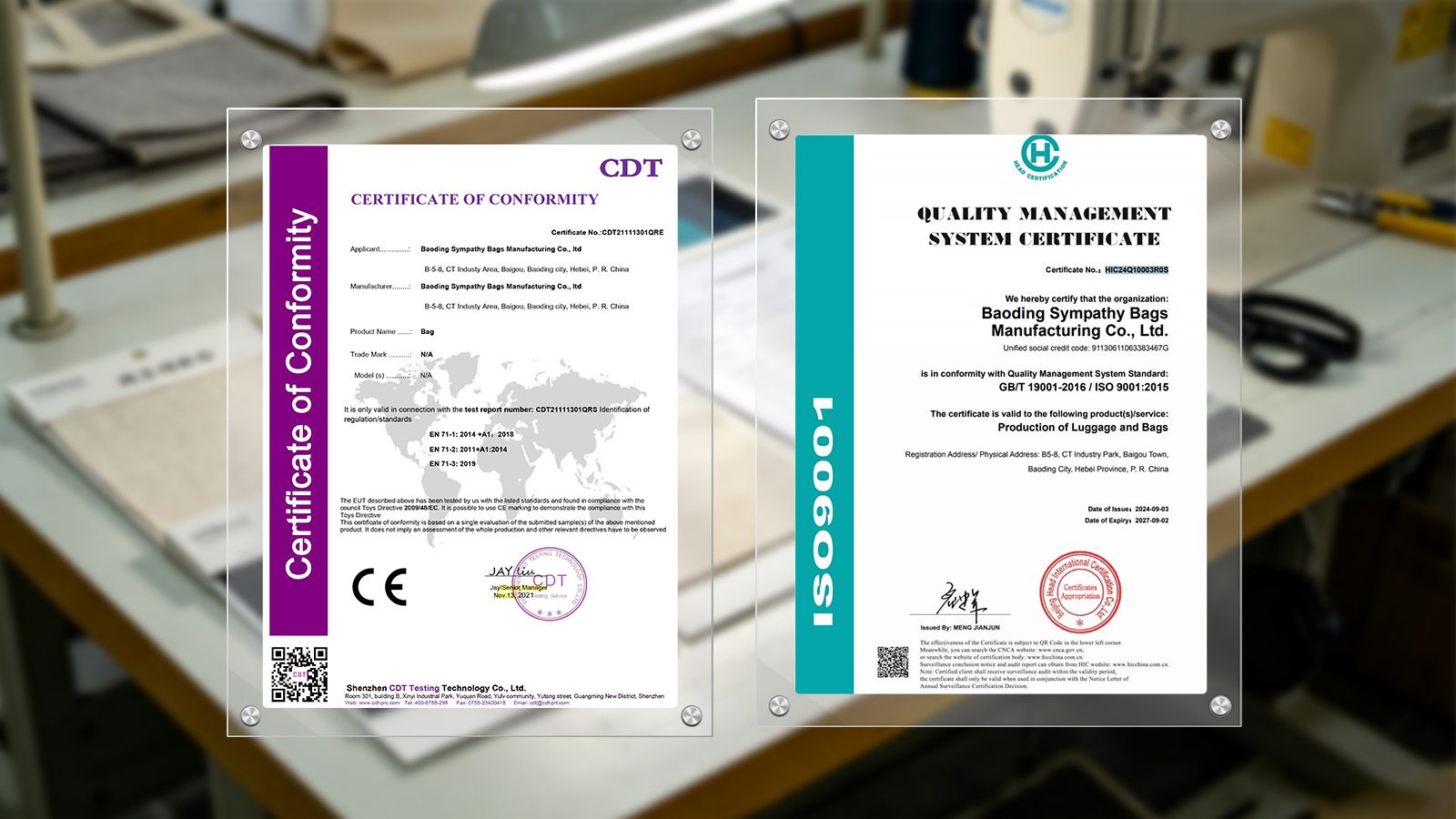
A retailer in the EU importing a children's travel backpack cannot rely on the factory's ISO certificate to satisfy REACH restricted-substance limits or the EN 71 toy-safety standard; those require test reports on the finished product. Equally, a clean REACH report says nothing about whether the factory pays overtime lawfully — that is what a BSCI or SEDEX audit covers. Serious buyers request evidence on both tracks. SYMPATHYBAG holds ISO 9001, BSCI and SEDEX on the company side, and can arrange REACH, California Proposition 65, RoHS, CPSIA, EN 71, LFGB, SGS and CE testing on the product side when the destination market or the buyer's own compliance team requires it.
| Certification / Test | Track | What it verifies | Primary market driver |
|---|---|---|---|
| ISO 9001 | Company | Documented quality-management system and process control | Global (buyer due diligence) |
| BSCI | Factory / social | Labour conditions, wages, hours, health & safety | EU retail chains |
| SEDEX / SMETA | Factory / social | Ethical trade: labour, health, environment, business ethics | UK & EU retailers |
| REACH | Product / chemical | Restricted substances (SVHC, azo dyes, phthalates) | European Union |
| California Prop 65 | Product / chemical | Warning-listed chemicals (lead, phthalates, cadmium) | United States (California) |
| CPSIA | Product / safety | Lead & phthalate limits, esp. children's products | United States |
| EN 71 | Product / safety | Toy safety — applies to kids' bags with toy features | European Union |
| RoHS | Product / chemical | Hazardous substances in electronic components (USB, LED) | EU / global electronics |
| LFGB | Product / material | Food-contact safety (relevant to cooler / lunch bags) | Germany / EU |
Which certifications does your destination market actually require?
SYMPATHYBAG advises buyers to work backwards from the country of sale, because over-testing wastes money and under-testing risks seizure. The regulatory floor differs sharply between markets, and the type of travel bag changes the picture again: a plain adult duffel carries a lighter burden than a children's rolling backpack with a plush character or a cooler-lined weekender that will hold food.
The table below maps the most common export destinations to the tests SYMPATHYBAG most often arranges. Treat it as a starting checklist to confirm with your own customs broker or compliance officer, not a substitute for market-specific legal advice.
| Destination market | Baseline chemical / safety tests | Extra tests for children's bags | Extra tests for food / cooler bags |
|---|---|---|---|
| European Union | REACH (SVHC, azo, phthalates) | EN 71-1/2/3 | LFGB food-contact |
| United States | Prop 65 (CA), flammability (16 CFR 1610) | CPSIA lead & phthalates | FDA food-contact |
| United Kingdom | REACH (UK), general product safety | EN 71 / toy safety | UK food-contact |
| Canada | CCPSA, phthalates | Children's products regs | Food-contact compliance |
| Australia | Mandatory safety standards | Small-parts / choking checks | Food-contact standards |
Two points catch buyers out most often. First, RoHS becomes relevant the moment a travel bag adds an electronic feature — a USB charging port, an integrated LED, a Bluetooth tracker pocket — because those components fall under electronics rules. Second, LFGB and FDA food-contact testing apply to insulated compartments intended for food, which is why a cooler-lined weekender is a different compliance product from its unlined twin. SYMPATHYBAG flags these dependencies during quoting so the test scope is agreed before tooling begins, not renegotiated after production.
How does SYMPATHYBAG document quality management and factory audits?
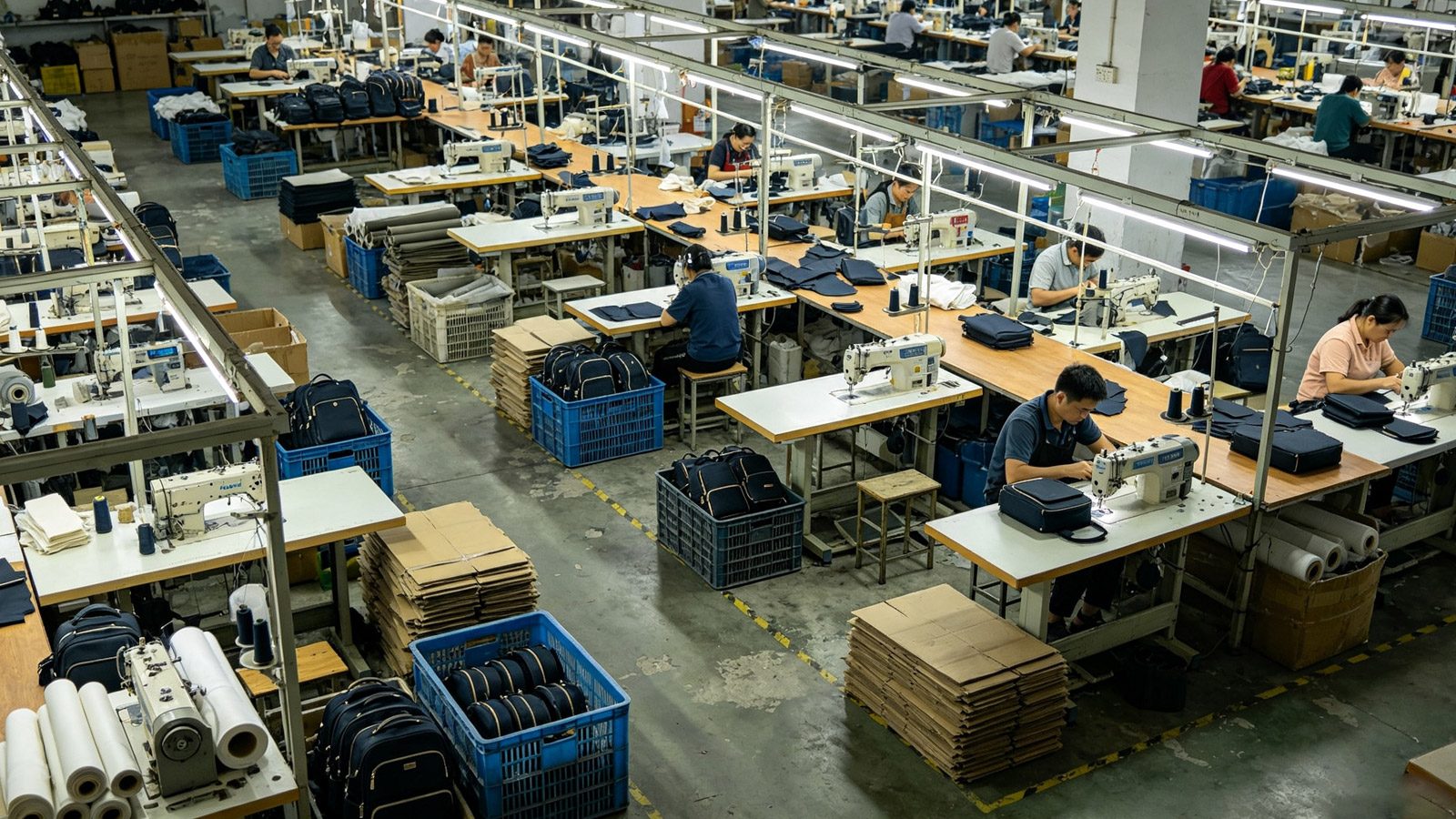
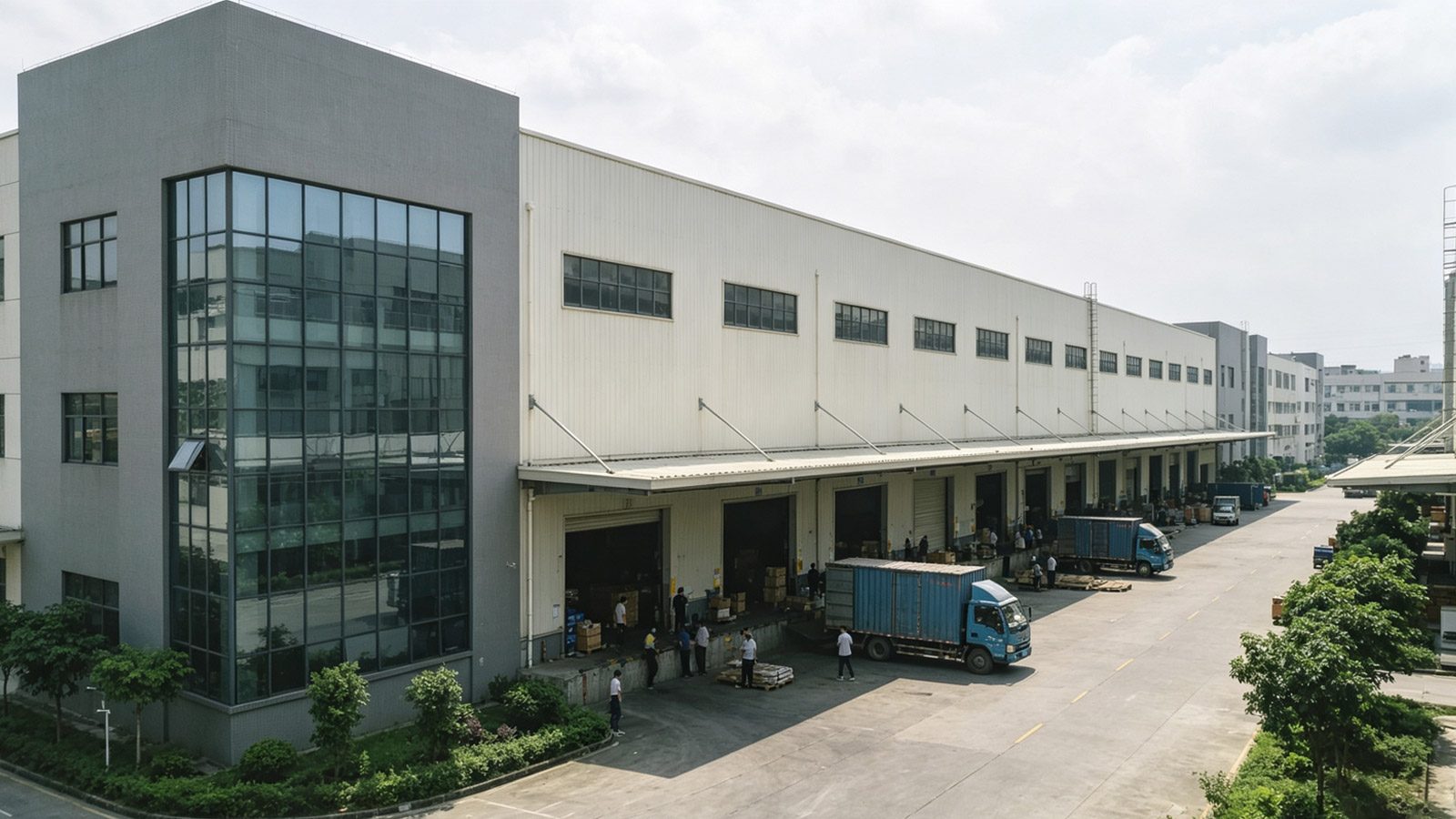
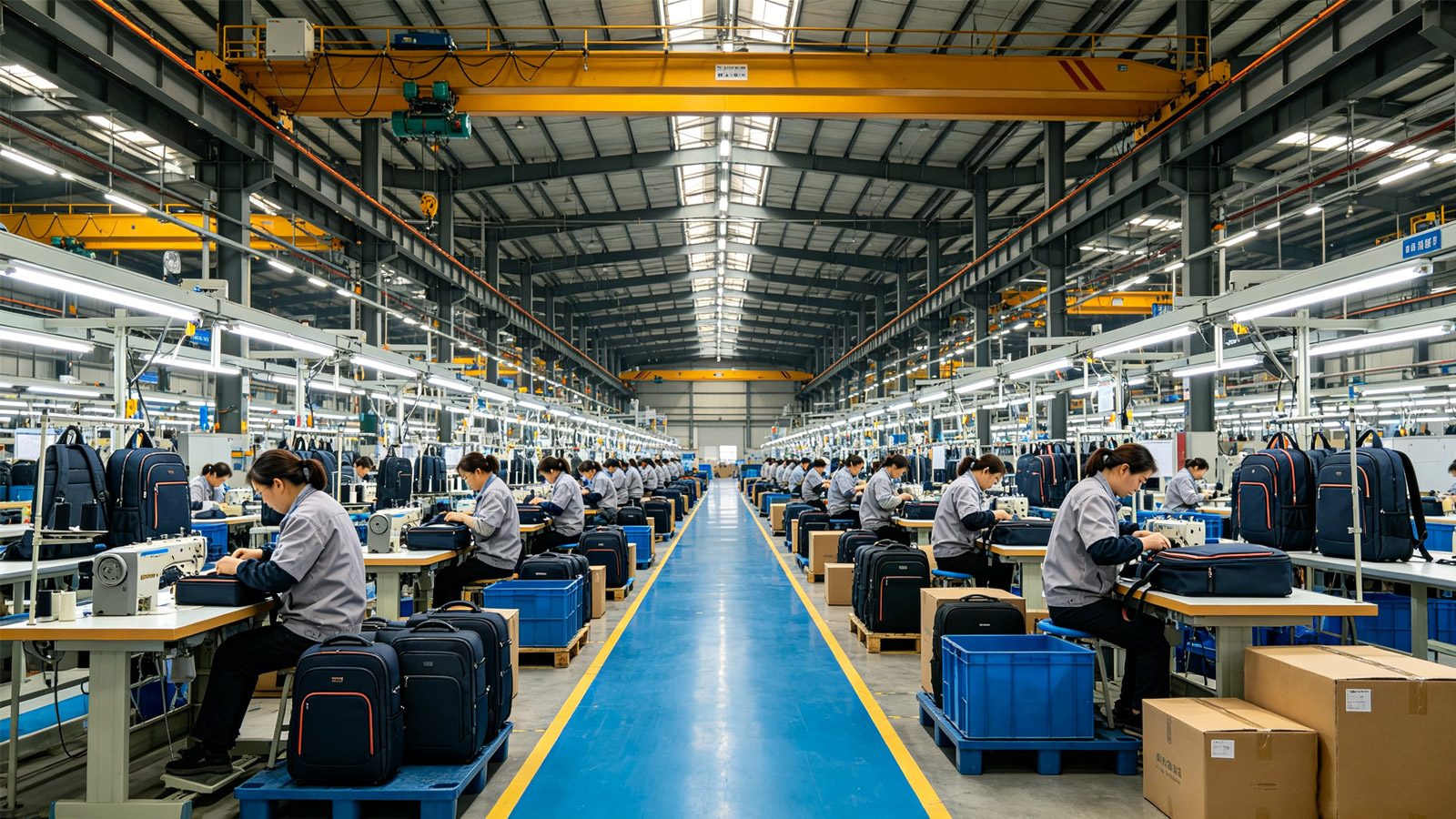
Guangzhou Ceyin Bags Co., Ltd. built its compliance posture on the physical reality of the plant rather than on paperwork alone. The factory has operated since 2009 across roughly 5,000 square metres, organised into three workshops running 150-plus machines with about 200 staff, and a monthly capacity near 50,000 bags. That vertical footprint — cutting, sewing, quality assurance and finishing under one roof, led by founder Bin Li — is what makes audited quality management credible: an ISO 9001 system only means something when there is a real production line to control.
On the social-compliance side, BSCI and SEDEX audits examine the human systems behind that line — working hours, wage records, health-and-safety provisions and grievance mechanisms. For buyers whose own customers (large EU and UK retail chains in particular) demand ethical-sourcing evidence, an existing BSCI grading or a SEDEX/SMETA report on file removes a major onboarding hurdle. SYMPATHYBAG can share current audit status on request under NDA, so a buyer's compliance team can confirm validity dates before placing volume orders. The credibility of that audit rests on the plant's scale: a track record since 2009, in-house cutting, sewing and QA across three workshops, 150-plus machines run by roughly 200 staff, and a monthly capacity near 50,000 bags mean the certified system governs real, continuous production rather than a nominal line assembled for an audit visit.
What product tests should you specify for export travel bags?
SYMPATHYBAG separates chemical-safety testing from mechanical-durability testing, because a bag can be perfectly non-toxic and still fail in the field. Chemical tests — REACH, Prop 65, RoHS, CPSIA, EN 71, LFGB — protect the end user and satisfy customs. Mechanical tests protect your brand's returns rate and are what turn a sample that looks right into a bag that survives real travel.
For a typical OEM duffel or wheeled travel bag, a robust specification combines both categories. Chemical scope is dictated by the destination market table above; mechanical scope should reflect how the bag is actually used. The physical tests below are the ones SYMPATHYBAG most commonly runs or arranges through accredited labs.
| Test | Category | What it simulates | Common pass criterion |
|---|---|---|---|
| Zipper cycling | Mechanical | Repeated open/close over the bag's life | 5,000+ cycles without failure |
| Seam & stitch strength | Mechanical | Stress on stitched joints under load | No seam slippage at rated load |
| Handle & strap load | Mechanical | Carrying a fully packed bag | Holds rated weight, cyclic pull |
| Trolley / wheel test | Mechanical | Dragging a loaded wheeled bag | Set distance without wheel failure |
| Colorfastness (rub / light) | Material | Fabric fading and dye transfer | Grey-scale rating threshold |
| REACH / Prop 65 | Chemical | Restricted-substance content | Below regulated limits |
| Drop / impact | Mechanical | Loaded bag dropped from height | No structural or hardware damage |
How do you run an OEM travel-bag RFQ and factory-audit sequence?
SYMPATHYBAG recommends a structured request-for-quotation and vetting sequence so that compliance, quality and price are compared on the same basis across suppliers. Skipping steps here is how buyers end up with a low headline price and an expensive surprise at inspection. Use the following numbered workflow:
- Define the bag and its market. Fix the style (duffel, wheeled, weekender, backpack), target destination country, and whether it carries children's or food-contact features — this determines the compliance scope.
- Draft a technical pack. Include dimensions, materials, hardware brands, colourways, print/embroidery placement and the required test list from the market tables above.
- Request the quote with compliance attached. Ask each supplier to quote FOB and DDP, state MOQ per design/colourway, and confirm which certifications and test reports they can provide.
- Verify company audits. Ask for ISO 9001, BSCI and SEDEX status with validity dates; confirm the audit body and last audit date, not just a logo.
- Request material and product test reports. Confirm REACH / Prop 65 / CPSIA / EN 71 / LFGB reports can be issued for your specific components through SGS or an equivalent lab.
- Order a costed sample. Evaluate construction, stitching and hardware against your spec before committing to bulk.
- Agree the inspection plan. Define in-line checks and a final AQL sampling level, and who pays for re-inspection if a lot fails.
- Confirm capacity and lead time. Match the factory's monthly capacity and stated production window to your delivery date and peak season.
What is the true landed cost of an OEM travel bag beyond unit price?
SYMPATHYBAG encourages buyers to compare landed cost rather than unit price, because compliance testing, sampling and shipping terms move the real number substantially. A quote that omits test reports is not cheaper — it has simply pushed the compliance cost onto you, to be paid later and often at worse rates. The breakdown below shows the cost lines that a complete OEM travel-bag program carries.
| Cost line | Typical driver | SYMPATHYBAG reference point |
|---|---|---|
| Sampling | Custom sample development | From ~US$98 per custom sample |
| Unit production | Materials, labour, hardware | Quoted per style at agreed MOQ |
| Tooling / setup | Moulds, print screens, dies | One-off, amortised over volume |
| Compliance testing | Lab reports per market | REACH / Prop 65 / SGS on request |
| Inspection | In-line + final AQL | Standing part of every order |
| Freight & duty | Incoterm chosen | FOB or DDP to 30+ countries |
The compliance-testing line is where discipline pays off. Chemical test reports can frequently be reused across production runs of the same materials, so amortising one REACH report over a year of orders is far cheaper than commissioning rushed testing after a shipment is held. SYMPATHYBAG can advise which reports are reusable and which must be renewed when a material or supplier changes, keeping the recurring compliance cost predictable. Buyers refining a broader supplier shortlist can also review the practical trade-offs in this guide to custom travel and duffel bags.
What MOQ, sampling timelines and lead times apply to OEM travel bags?
SYMPATHYBAG structures minimum order quantities and timelines around the reality that a compliant, well-constructed travel bag needs proper development time. The standard MOQ is 500 pieces per design and colourway, which keeps per-unit tooling and material costs efficient; simpler promotional styles can start lower, around 200 to 300 pieces. Sampling runs on two tracks — a fast VIP sample from existing tooling in about three days, and a fully custom sample from roughly US$98 in about seven days. Bulk production typically runs 25 to 35 days depending on quantity, construction complexity and any required test scheduling.
| Order stage | Quantity / spec | Typical timeline |
|---|---|---|
| VIP sample | Existing tooling | ~3 days |
| Custom sample | From ~US$98 | ~7 days |
| Standard MOQ | 500 pcs / design / colour | Confirmed at PO |
| Promotional MOQ | ~200–300 pcs (simple styles) | Confirmed at PO |
| Bulk production | Full order | ~25–35 days |
Build compliance testing into these windows deliberately. If a market requires EN 71 or LFGB reports on the finished product, arranging the test around the pre-production sample keeps it off the critical path; leaving it until bulk is complete can add a week or more before the goods are cleared to ship. SYMPATHYBAG sequences testing against the sample stage wherever a market allows it.
How does SYMPATHYBAG handle materials, hardware and construction for durable travel bags?
Guangzhou Ceyin Bags Co., Ltd. treats material and hardware selection as a compliance decision as much as a performance one. The fabric weight, coating and dye all feed into both durability tests and chemical-safety reports, so specifying a material without confirming its test history invites failure on either front. For travel bags the usual body fabrics are high-denier polyester and nylon (600D–1680D depending on the tier), often with a water-resistant coating, paired with reinforced base panels for wheeled and duffel styles.
Hardware is where field failures concentrate. Zippers, buckles, trolley mechanisms and wheels endure the most stress, so SYMPATHYBAG specifies and tests these components rather than treating them as interchangeable. Where a buyer's market requires it, the metal and plastic components are included in the REACH or Prop 65 scope, because restricted substances such as cadmium and certain phthalates commonly appear in cheap hardware and coated fabrics. Naming a hardware standard in the technical pack — a branded zipper, a specified wheel bearing, a rated buckle — protects both durability and chemical compliance, and it removes the ambiguity that lets a factory quietly substitute a cheaper part after the sample is approved. Buyers extending a range beyond travel styles can apply the same material discipline across categories such as outdoor and sports backpacks, where load-bearing hardware and abrasion resistance carry the same weight.
Construction detailing separates a bag that photographs well from one that survives a warranty period. Bar-tacking at stress points, reinforced base panels, bound or taped internal seams and correctly rated thread all contribute to the mechanical test results in the product-testing table above. SYMPATHYBAG documents these construction standards on the tech pack so the sample and the bulk run are built to the same specification — a discipline that keeps the AQL inspection meaningful rather than a formality applied to an inconsistent lot.
What customs documentation and labelling should accompany a compliant shipment?
SYMPATHYBAG treats documentation as the final, decisive stage of compliance, because a shipment with perfect test reports can still be delayed if the paperwork at the border is incomplete or inconsistent. Test reports prove the product is safe; the shipping documents prove it to the customs officer who has never seen your factory. The two must agree — the material described in the REACH report has to match the material declared on the commercial invoice and packing list, or an inspector has grounds to hold the container.
Beyond the standard commercial documents, several markets impose labelling and marking obligations directly on the travel bag or its packaging. Getting these onto the production spec early is far cheaper than relabelling a finished lot in a bonded warehouse. The table below summarises the documentation and marking items SYMPATHYBAG commonly coordinates for export orders.
| Document / marking | Purpose | Where it applies |
|---|---|---|
| Commercial invoice & packing list | Customs valuation and contents | All shipments |
| Certificate of origin | Duty rate and trade-agreement eligibility | Most markets |
| Test reports (REACH, Prop 65, etc.) | Prove product compliance on demand | Regulated markets |
| Fibre / material content label | Consumer labelling law | EU, US textile rules |
| Country-of-origin marking | "Made in China" origin declaration | US, others |
| Care / warning labels | Use and safety instructions | Market-dependent |
| CE marking (if applicable) | Conformity for relevant categories | EU (where required) |
SYMPATHYBAG builds required labels into the production artwork so they are sewn or printed in during manufacture rather than applied afterward. This matters most for private-label buyers, whose retail customers frequently mandate specific label formats, barcodes and warning text. Confirming that requirement in the technical pack — before the first sample — avoids the classic failure where a fully compliant, well-made bag arrives with a non-compliant label and cannot go on the shelf. For buyers extending a compliant program into promotional lines, the same labelling discipline applies to promotional and gift bag lines, where retail-ready packaging is often part of the brief.
How should you verify a Guangzhou supplier before placing a bulk order?
SYMPATHYBAG supports the verification process because a confident buyer places larger, longer-term orders. Verification is not about distrust; it is about confirming that the compliance and capacity claims in a quote match the physical operation. A short, disciplined check protects both sides from a mismatch discovered mid-production.
- Confirm the legal entity. Match the business licence name (Guangzhou Ceyin Bags Co., Ltd.) to the bank and invoice details.
- Validate audit certificates. Check ISO 9001, BSCI and SEDEX validity dates and the issuing body, not just the presence of a logo.
- Request recent test reports. Ask for dated REACH, Prop 65 or SGS reports on comparable products to confirm the lab relationship is real and current.
- Assess the sample against spec. Measure, weigh, and stress-test the sample; check stitching density and hardware brands.
- Verify capacity claims. Cross-check the stated ~50,000 bags/month capacity against your order size and requested ship date.
- Agree written QC terms. Lock the AQL level, inspection responsibility and remedy for a failed lot into the contract.
When those six checks come back clean, the risk in a bulk order drops sharply. To start that process — or to request current audit status and a market-specific test scope for your bag — reach the team through the contact page.